Development
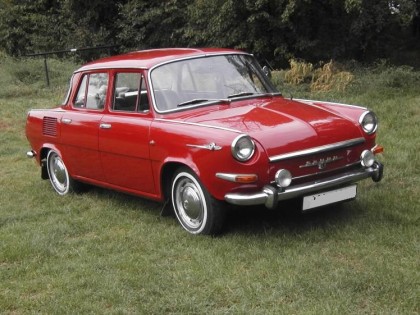
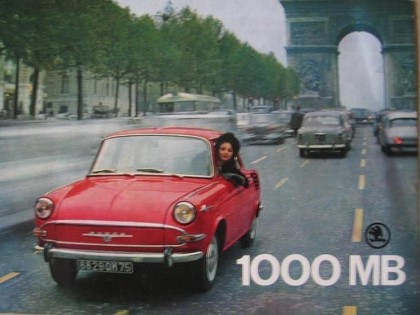
This article maps the gradual development, innovations, and changes that accompanied the production of Škoda MB and Škoda 100 vehicles between 1964 and 1976, and partly the period that followed. The overview was prepared by RNDr. Vladimír Cajz, CSc., to whom we express our thanks for his detailed work. The author also welcomes any additional information or comments at v.cajz@ig.cas.cz.
Škoda MB 1000
Series 0 – Start of production
- 04/1964 – beginning of MB 1000 production
- Engines No. 000501–001000 (April 1964)
- Colors: 113 – dark gray, 432 – dark blue, 612 – ivory, 831 – orange red
- Price: 44,000 Kčs
Series 1
- 06/1964
- Engines No. 001001–003100 (05–07/1964)
- From engine No. 002500 – shortening of front coil springs from 292 to 281 mm free length and increased travel of front suspension arms
Series 2
- 08/1964
- Engines No. 003101–013200 (07–10/1964)
- Change in wiring of parking light switch (in rear pillars) from engine No. 005907
- Reinforced piston pin – internal diameter reduced from 13 to 12 mm (outer diameter 18 mm)
Series 3
- 10/1964 – 02/1965
- Engines No. 013201–026260
- From engine No. 017201 – fan pulley diameter increased from 112.5 mm to 129.5 mm, V-belt changed from 13×1000 to 13×1030 to reduce fan noise
- From engine No. 019320 – thermostat with 1.5 mm vent hole instead of original 1 mm
- During the year, single-seater Š 992 for Formula Junior (F3) built with modified MB engine (998 cm?, 72×61.3 mm, output 76 hp / 56 kW at 7750 rpm)
- Production 1964: 18,653 MB cars
- 01/1965 – from engine No. 022731, camshaft reinforced at timing gear mountings from diameter 36 to 40 mm
Series 4
- 02–04/1965
- Engines No. 026261–034260
- Distributor modification
- New heater fan motor
- New windshield washer nozzles
- Improved door switches (from No. 032600)
- 03/1965 – differential gear ratio changed to 16/10 from previous 17/11
Series 5
- 04–06/1965
- Engines No. 034261–050170
- From May 16 – solid upper front suspension arm pin (previously lightened)
- From May 15 – new oil pressure gauge (baroscope)
- From engine No. 041700 – felt wiper rings added to gearshift lever rod
Series 6
- 06–09/1965
- Engines No. 050171–064810
- New fuel tank float and gauge, including gasket
- Change in headlight optical insert
- 07/1965 – from body No. 056200, brake fluid “ATE Blau” replaced first with PENTOSIN (West Germany) and later with SYNTOL HD 190 (licensed Pentosin)
- From engine No. 056303 – cylinder head stud nuts 17 mm instead of 14 mm
- From engine No. 060330 – change in dashboard bulb holders, now with blade connectors
- 08/1965 – modification of rear brake circuit distributor
- 09/1965 – from engine No. 061950, clutch disc reinforced from 10 to 11.5 mm (with corresponding flywheel change)
- From engine No. 062000 – oil pump gear width increased by 2 mm along with changes to timing cover, distributor mount, and oil pump shaft
Series 7
- 09/1965 – 01/1966
- Engines No. 064811–083371
- From body No. 067316 – reinforcement under fuel tank added for towing purposes
- From engine No. 073135 – enlarged openings inside gearbox casing (gear oil can be refilled without overflow risk)
- 12/1965 – from engine No. 079874, model year 1966 (1000 MB)
- Front body section modified (oval closed ahead of indicators)
- Rear doors equipped with child safety locks
- Changes to engine front plate, oil pump, distributor bracket, and oil intake
- Higher output thanks to valve timing modification (longer intake opening)
- Main carburetor jet increased from 120 to 125
- Color palette: 113 – dark gray, 116 – light gray, 429 – blue, 436 – blue-green, 625 – light beige, 837 – red
- Within the model year, production of the sporty two-door MBX 1000 (type 723, until 1968, 1,403 units built) was planned
- From engine No. 080000 – rear axle geometry changed from toe-out 0 to -2 mm to toe-in 0 to +2 mm
Series 8
- 01–04/1966
- Engines No. 083372–103071 (type 721)
- Second (inner) valve spring added
- Another modification to oil intake pipe
- Carburetor 32BST18 instead of previous 32BST13
- New heater control levers
- Changed design of vent window handle (still metal)
- New windshield washer pump and tank with “Gejzír” marking
- Plastic distribution valve replacing the previous metal one
- Production 1965: 63,600 cars
- 01/1966 – from engine No. 084740/1, new camshaft (240–233/27.5; model 1966 up to Š 120, previously 233/24), advance 5°
- From body No. 088136 – new engine hood support (moved from side to center) and modified air filter
- From engine No. 087934 – new cylinder head (change at rear left behind exhaust manifold of 1st cylinder), studs replaced by hex-head bolts
- From body No. 089682 – new window and vent handles (plastic tip), new windshield washer assembly (“Gejzír” marking on reservoir), narrow decorative oval grille
- From body No. 098625 – all tools (including jack) placed exclusively under the left rear seat (previously near the spare wheel, where they could rattle)
Series 9
- 04–09/1966
- Engines No. 103072–123021
- Start of production of the more comfortable 1000 MB De Luxe version
- From start of production – square ventilation openings in rear fenders and narrow front grille oval (already from Series 8 according to catalog)
- 04/1966 – from body No. 105100, brake linings bonded (previously riveted); effective area and lifespan increased down to minimum thickness of 1.5 mm (according to catalog from Series 12 or engine No. 111050, i.e., early May)
- From engine No. 111227 – new dynamo ? 112 mm and pulley diameter change
- From body No. 117355 – reverse light wiring for De Luxe trim (switch in tunnel on removable cover)
- Modification of front fog light wiring (parking light switch used) and adjustment of fuse circuits 1 and 2
Series 10
- 09–12/1966
- Engine No. 123022–141221
- New cylinder head cover (with lowered neck)
- New oil seal
- Smaller diameter fan pulley (again 112.5 mm)
- Aluminum wheel spacers and aluminum sill strips (for De luxe models)
- New horn
- In autumn 1966, the launch of the twin-carburetor version 1000 MBG (type 710) was planned
- 09/1966 – from body No. 129,032, change in transmission cover securing – two turnbuckles instead of three screws
- From engine No. 136,059 – modifications to simplify and improve acceleration control (new accelerator pedal console, new linkage at carburetor – four new parts)
Series 11
- 12/1966 – 01/1967
- Engine No. 141222–163119
- From engine No. 142,893 – new horn sealed against water ingress
- First sports modification 1000 MB A2 (year 1966): 988 cm? (68×68 mm), compression 8.3, Jikov 32 SOPc carburetors, 64 hp (47 kW)/6000 rpm, torque 85 Nm / 4000 rpm
- 1966 Production: 78,434 MB vehicles
Series 12
- 01–04/1967
- Engine No. 163120–186319
- New ignition cable set (green carbon cables Lucas or Kablo Kbely)
- New lower engine cover bolts (with hexagonal head instead of cylindrical)
- Modified air intake in rear fenders – square vents (also for standard version)
- Color palette: 429 – blue, 436 – blue-green, 837 – red, 1013 – lavender gray, 1025 – navy gray
- 01/1967 – gearbox oil filler neck closed with plastic cap (previously conical screw); change in wiper motor and turn signal flasher wiring (switched on fuses 1 and 2)
- Early in the year, production launch of the two-door 1000 MBX (type 723)
- From body No. 180,898 – improved headlight (change in reflector shape, new optical properties of glass – different grooving)
Series 13
- From 04/1967
- Engine No. 186320–210119
- Change in door window winder (for De Luxe equipment also rear doors)
Series 14
- Until 09/1967
- Engine No. 210120–232569
- Change to water pump
- Color palette: 837 – red, 1013 – lavender gray, 1016 – gray-white, 1025 – navy gray, 4270 – light turquoise, 5910 – dark green, 8220 – dark red
- 08/1967 – from engine No. 215032, reinforcement of front axle mounting by adding pressed grooves
- From engine No. 223460 – introduction of "Gufero" sealing ring on crankshaft bearing at flywheel instead of original labyrinth; on flywheel from crankshaft side, recess increased by 1 mm and diameter from 102 (+1) to 110 (+1) mm
Series 15
- 09–12/1967
- Engine No. 232570–259270
- New interior rearview mirror – plastic trapezoidal instead of metal rectangular
- Side turn signals in front fenders (instead of position lights in rear pillars – according to catalog during Series 15)
- Silver paint on wheel rims (previously white)
- 09/1967 – from body No. 229656, new shift console with redesigned rod sealing in body, self-lubricating shift lever bushing
- From engine No. 226309 – reinforcement of main bearing bridge in engine block in connection with launch of 1107 cm? engine (72×68 mm)
- 11/1967 – from body No. 251234, replacement of rubber door seal (first glued, then secured with metal reinforcement)
- From engine No. 248885 – new housing for larger thermostat
- 05. 12. 1967 – total of 250,000 vehicles produced
Series 16
- 1967–1968
- Engine No. 259271–290099
- Modified thermostat housing (with connecting hose diameter 23 mm)
- New tire tread pattern (OS 25)
- Engine fan with 10 blades – for tropical conditions and model 1100 MB
- 12/1967 – from body No. 261409, new interior mirror with increased viewing angle
- 1967 Production: 96,348 vehicles
- 01/1968 – production introduced of 1100 MB De Luxe (type 715) and 1100 MBX De Luxe (type 723), produced until 1969 (22,487 units MB De Luxe and 1,114 units MBX De Luxe)
- Camshaft of 1107 cm? engine – 240/25
- From body No. 262781 – introduction of brake fluid level indicator, connected to oil pressure warning light
- From engine No. 265013 – introduction of ball bearing 6202/Z instead of plain bearing in crankshaft and shortening of clutch shaft from 280 to 272 mm
- From engine No. 266123 – new larger cooling thermostat including new housing and hose
- From engine No. 267500 – double-row ball bearing 3205N/C6 in gearbox instead of single-row; 3rd and 4th gear wheel mounted on splines, nut secured by retaining ring
- 02/1968 – from body No. 280451, introduction of cork brake fluid level float (instead of metal), fiber cover gasket, indication in oil pressure warning light
- 04/1968 – from body No. 292501, reinforcement of steering rod from 13 to 18 mm
- From engine No. 293501 – reinforcement of clutch disc from 11.5 to 13.5 mm (disc plate thickness from 3 to 4 mm) for higher torque transmission; enlargement and reinforcement of springs and bushings on pressure plate – unification with MB 1100 model
- 05/1968 – from body No. 319701, plastic sun visor holder instead of metal
- From body No. 325855 – change in window lever control, simplified construction
Series 17
- Until 07/1968
- Engine No. 290100–318699
Series 18
- From 08/1968
- Engines No. 318700–342189
- Model year 1969 – 1000 MB and 1100 MB De Luxe with a new, more elegant front section (three-piece decorative grille with “ŠKODA” lettering instead of oval and square indicators)
- Wider roof pillars and roof without recess – body innovation, increased headroom above the rear seats
- Dashboard modification – now matte finish to reduce glare and rough-textured plastic cover for steering column and instrument panel
- Narrower pulleys (V-belts and pulleys also used later for Š 100)
- New vent window handles (fully plastic)
- Side direction indicators only as optional equipment
- Modified radiator – filler neck moved to the right, finer fins
- Interior power socket as optional equipment
- Improved windshield wipers
- During this model year, production of the MBX 1000 (replaced by MBX 1100) and 1000 MBG was discontinued
- Color palette: 1013 – lavender gray, 1019 – sand, 1025 – navy gray, 4270 – light turquoise, 5910 – dark green, 8220 – dark red
- Prices at end of production: 1000 MB – 45,699 Kčs; 1000 MB De Luxe – 48,900 Kčs; 1100 MB De Luxe – 51,700 Kčs; 1100 MBX De Luxe – 52,900 Kčs
- From engine No. 324800 – distributor from MB 1100 also used for MB 1000, advance +5°
- From engine No. 325777 – oil pump output increased to 2 kp/cm? at 2000 rpm (gear height 20 mm)
- 09/1968 – from body No. 344025, change of lower door seal
Series 19
- Until 12/1968
- Engines No. 342190–371739
- 12/1968 – from body No. 378101, braking efficiency improved by introducing a larger front brake cylinder (? 25.5 mm)
- For MB 1100, optional rear axle pressure limiter – improved directional stability
- According to catalog, larger brake cylinder for MB 1100 introduced from Series 17, for full production from Series 18
- Production 1968: 111,386 vehicles
Series 20
- 12/1968 – 03/1969
- Engines No. 371740–403539
- 01/1969 – from body No. 383101, new tire inner tubes with valve diameter 11.5 mm (previously 16 mm) and corresponding rim hole change
- 02/1969 – from body No. 390901, new bonnet latch pins with 17 mm wrench flats; new “Raybestos” type brake linings
- 03/1969 – from engine No. 403434, distributor rotor fastening changed from screw to spring type
- During the year, competition versions Studio B5 (later Metalex) prepared with 988 cm? (81 hp / 60 kW at 7000 rpm) and 1107 cm? (84 hp / 62 kW at 6800 rpm) engines
Series 21
- 03–08/1969
- Engines No. 403540–435039
- 04/1969 – from body No. 415300, rear axle brake cylinder diameter changed from 22 to 19 mm. The pressure limiter on the rear axle used in MB 1100 was removed, including its body mounting bracket.
- From body No. 415500 – modification of handbrake cable routing (under the cover on the central tunnel, as in Š 100 model)
- From body No. 420101 – lengthened rubber bushing and spacer tube in upper front suspension arm mounting, as well as the mounting pin and bracket
- 08/1969 – from body No. 452651, change of fuel tank drain plug from conical to cylindrical M14×1.5 with sealing washer
- 1 August 1969 – end of production of Š 1000/1100 MB/MBX models
- 12 August 1969 – factory fire
Notes
- According to catalogs, production of the Š 100/110 directly followed that of the MB, as if it were the same model – the last MB series (21) was followed by the first Š 100/110 series labeled 22.
- Approximately 850 engines are missing between Series 21 (MB) and 22 (Š 100).
- During the production transition, MB bodies were sometimes fitted with engines already belonging to Series 22 (Š 100) – these engines were marked “/7” at 988 cm?. This was likely a response to production disruptions caused by the fire.
- Model year 1970 begins during Series 22.
Škoda 100/110
Series 22
- 08–12/1969 (production start: 25 August)
- Engines No. 435890–461839
- From engine No. 450632/8 and body No. 457696 – Model year 1970: Š 100 (type 722) and Š 110 (type 717)
- From start of production – front disc brakes and dual brake circuit
- Significant reduction of lubrication points on front axle thanks to self-lubricating or permanently greased bearings
- Enlarged front wheel bearings
- “Square” body facelift – larger headlights, laminated windshield (previously tempered)
- Reinforced piston pin (? 20 mm)
- Color palette: 1002 – white-gray, 1019 – sand, 1071 – medium gray, 5002 – light green, 5910 – dark green, 8220 – dark red
- Price: Š 110L – 63,000 Kčs
Series 23
- 12/1969 – 1970
- Engine No. 461840–495339
- From body No. 499501 – new soft fender seals
- 1969 Production: 118,491 vehicles
- 11. 2. 1970 – the 500,000th vehicle produced, first owner was Ludmila Velková
- During 1970, prototype of super sports coupe 1100 GT completed at ÚVMV (engine 1138 cm?, 73×68 mm, compression 12, output 55 kW / 75 hp at 5750 rpm, angular rear axle, ram air cooler in front)
- Planned 1100 cm? 2×OHC engine (based on original block) with fuel injection option, valves 36.6 / 32.6 mm, 2× Weber 40 DCOE carburetor – project not realized (intended by Autodružstvo Praha)
- 02/1970 – from engine No. 510078, unification of camshafts for both displacements to 240–233/27.5 (timing also used for series 105/120)
- 03/1970 – from body No. 529101, change in kingpin axial mounting (friction rings replaced by washers, metal washers under nuts removed)
- 06/1970 – production launch of sports coupe Š 110 R (type 718K) at Kvasiny plant:
- Higher compression, twin Weber 28/36 DCD carburetor (later Jikov 32 DDSR 3159)
- More aggressive cam (247/32), different valve rockers (C), three-ring pistons
- Oil cooler, 14V/35A alternator
- Color palette: 6145 – lemon yellow, 8134 – racing red, 5020 – spring green
- Price: 78,000 Kčs; total of 56,902 (or 57,085) units produced (until 1980)
- From body No. 563901 – change in kingpin lubrication surface position by 180°, toward the heads
- 08/1970 – from engine No. 568887, improved carburetor (mechanical choke, brass throttle valve pin, new diffuser, vacuum breather connection)
- From body No. 583900 – reinforcement of vertical kingpin in lower section from ?17 to ?18 mm, change in kingpin head
- From body No. 590401 – change in automatic trunk lid support
- 09/1970 – from body No. 595801, increase in number of front fender mounting screws M7×14 by two pieces
- 10/1970 – from body No. 603051, introduction of two-piece (safety) steering column
- From body No. 614025 – change in hazard light switch wiring (even with ignition off); newly brake pedal depression indicator (lining force) connected to rear circuit
- 11/1970 – from engine No. 610121, new large distributor (design similar to Octavia Combi)
- 12/1970 – from body No. 630501, new plastic fender seals (from 02/1971 also for Š 110 R)
- 01/1971 – production launch of sports sedan Š 110 LS (type 719):
- Dual-tone horns, external mirror on fender, electric windshield washer
- Radial tires (OR6), new front seat backrests, safety interior mirror
- Engine taken from Š 110 R coupe, price 65,000 Kčs
- Total of 40,057 units produced
- During the year, competition version Š 110L Rallye prepared (eight-port head, Weber 28/36 DFI-2 carburetor, compression 10.4, cam 280/70, output 54 kW / 73 hp at 6000 rpm, torque 93 Nm / 4500 rpm)
- End of summer, Super Sport prototype presented (type 724) with Š 110L Rallye engine turned in front of gearbox – later known from the film Upír z Ferratu (Juraj Herz, 1982). Car later repainted black, wing added and remained in this form to this day.
Series 28
- From engine No. 635278/4 (110R) – introduction of distributor assembly with vacuum advance (110R engines until then had only centrifugal advance)
- 08/1971 – from engine No. 700170 Model Year 1972
- Forced body ventilation, fixed rear door window, change in interior mirror and sun visor mounting
- Change in front door vent window opening (without mechanism)
- Change in fender fuel filler opening – newly door instead of pop-out emblem
- Change in rear panel – extension of center reinforcement along full height, vertical ribbing, aluminum cover strip
- New interior door panels, innovation in upper part of dashboard (in "De Luxe" version, tray for storing items)
- Color palette: 8220 – red, 5102 – light green, 2086 – light brown, 1002 – gray-white, 5441 – khaki, 4153 – gray-blue
- 110R Coupe: reinforcement of center pillars, relocation of seat belt mounting screw from roof beam (from body 0 595766), rear pillars with ventilation openings, front seats with headrests
Series 30
- Engine No. 702920–728969 (from 08/1971)
- From body No. 715570 – enlargement of fuel tank vent (tube) from 9 to 12 mm (different tank)
- 09/1971 – from body No. 728501, new plastic shift knob
Series 31
- Engine No. 728970–765669 (from 10/1971)
- 11/1971 – from body No. 753800, improvement of spare wheel mounting
- 12/1971 – from body No. 767001, change in shape of front brake circuit distribution block
Series 32
- Engine No. 765670–782769 (from 01/1972)
- 01/1972 – from body No. 777270, replacement of "Glacier" steering rod plain bearings with "Desmopan 295"
- From body No. 59555 (110R) – dashboard innovation (painting instead of upholstery, new instruments)
- 02/1972 – from body No. 59369 (110R), passenger sun visor supplemented with mirror (except for vehicles for Sweden)
- 03/1972 – from body No. 812500, new front door glass seals
Series 33
- Engines No. 782770–800339 (from 04/1972)
- 04/1972 – from body No. 816400, one-piece steering column reintroduced instead of split type
- From body No. 823500 – windshield wipers painted matte black (previously chrome)
- From engine No. 882631 – new oil pressure warning light sensor switch
- During the year, the rally version Š 120S Rallye (type 728) was developed:
- Engine 1172 cm? (72×72 mm) with flat pistons, eight-port cylinder head
- 2× Weber 40 DCOE2 carburetors, dry sump lubrication, front-mounted radiator with bonnet outlet
- Compression 10.3, output 62 kW (84 hp) / 6000 rpm, torque 105 Nm / 5000 rpm
- Production version with 32 DDSR carburetor, compression 9.4, output 47 kW (64 hp) / 5250 rpm, torque 100 Nm / 4000 rpm, likely with a milder camshaft
- 08/1972 – Model year 1973
- From body No. 861000 – change of fuel filler opening (door moved higher), filler hose extended by 10 cm
- Alternator 490 W (35 A) and corresponding relay for all models
- Two-speed heater fan for all models
- New recessed Bomoro door lock mechanisms (already used on 110R)
- New decorative trim on the front panel
- Models 110 LS and 110R received quad-headlight front fascia; 110R also gained seats with headrests
- Price of 110R: 79,100 Kčs
- New dashboard for sedans – side air vents allowing airflow to side windows
- Dashboard color variants:
- Standard: gray with black trim
- De Luxe: black with polished trim and ribbed texture
- 110 LS: black with wood imitation and polished trim (previously gray)
Series 34
- Engines No. 849570–880369 (from 08/1972)
- From body No. 861730 – gearbox driven wheel bush grooves changed from longitudinal to radial
- 09/1972 – from body No. 872001, change in side vent window handles
Series 35
- Engines No. 880370–919969 (from 10/1972)
- 11/1972 – from body No. 900625, new door seals at sills (profile ? 18 mm instead of 16 mm)
- From body No. 904800 – new securing of steering column joint (nut with plastic insert instead of castellated nut with cotter pin)
- 12/1972 – from body No. 927501, drain plug for excess oil on rear half-shafts removed
- 01/1973 – production continued without major changes
Series 36
- Engines No. 919970–961969 (from 01/1973)
- Quad-headlight front introduced for Š 110R and Š 110LS models
- Side warm air vents in dashboard for all models
- From engine No. 927420/4 – new stamping for heat shield below Jikov 32 DDSR carburetor (110R and LS)
- From body No. 935100 – lockable fuel cap introduced
- From body No. 938200 – redesigned brake fluid reservoir cover
- 03/1973
- From body No. 948200 – new outer door handles with black plastic coating
- From body No. 950101 – TSP-2 grease in door locks replaced with Mobilgrease-932
- From body No. 956351 – redesigned lower front suspension arms for increased durability
- From body No. 957151 – plastic heater vents instead of original metal ones (above pedals and passenger’s feet)
Series 37
- Engines No. 961970–1002969 (from 04/1973)
- From body No. 964000 – radiator mounting modified, bottom bolt omitted
Series 38
- Engines No. 1002970–1034769 (from 08/1973)
- 08/1973 – brass carburetor float replaced by plastic (Š 100 and Š 110 models)
- 29 August 1973 – one millionth car produced, a red Škoda 110 LS
- From body No. 1 012 001 – left door mirror fitted
- Model year 1974
- From body No. 1 016 001 – new external rear-view mirror
- Reverse light switch moved to gearbox
- New color palette for sedans: 8220 – red, 5157 – green, 2166 – yellow, 1036 – gray-white, 4085 – light blue, 4466 – medium blue, 5051 – bright green
- 09/1973 – from body No. 1 034 300, exhaust silencer bracket modified
Series 39
- Engines No. 1034770–1075669 (from 10/1973)
- 10/1973 – from body No. 1 034 770, flap removed from heater fan housing
- 12/1973
- From body No. 1 075 975 – production plate relocated from engine bay to luggage compartment (right wheel arch), stamped number remained above radiator
- From body No. 1 079 350 – further modification of lower front suspension arms for increased service life
Series 40
- Engines No. 1 075 670–1 116 819 (from 01/1974)
- 01/1974
- From body No. 1 080 201 – new antifreeze coolant Fridex (Spolana) introduced
- Lockable fuel cap introduced
- From body No. 1 116 001 – reverse light switch relocated from tunnel to gearbox (gearbox innovation, wiring modification)
- 04/1974 – production continued unchanged
Series 41
- Engines No. 1 116 820–1 157 350 (from 04/1974)
- From engine No. 1 116 820 – valve safety ring removed
- 07/1974 – from body No. 1 272 260, rear vent window no longer openable, now fixed (larger glass)
- 08/1974 – transition to next series
Series 42
- From 08/1974
- From engine No. 276082/8 – gearbox pinion and gears assembly: 2nd, 3rd, and 4th driven gears rotate directly on splines without bushings
- From engine No. 286084/8 – valve retaining rings and grooves removed on intake valves
- From body No. 5 019 884 (110R) – center console extension (for car radio) installed as standard, reaching down to the tunnel
Series 43
- From 10/1974 – minor adjustments, no significant structural changes
Series 44
- From 01/1975
- From engine No. 356650/8 – locking washers of connecting rod bolts omitted
Series 45
- From 04/1975
- From engine No. 388001/4 (models 110R and 110LS) – new starter excitation coil
- From engine No. 388242/4 – new oil control piston ring with spring (same as Š 120 model) for LS and R engines
- 04/1975
- Production launch of competition car Š 130 RS (type 735)
- Body derived from 110R, lightweight parts – fenders, hoods, organic glass
- Engine 1289 cm? (75.5 × 72 mm), eight-port head, larger valves (intake 37 mm, exhaust 32 mm)
- 2× Weber 45 DCOE, compression 10.5, 82 kW (112 hp) / 7250 rpm, 125 Nm / 5000 rpm
- Cast iron crankshaft bearing caps, full-flow oil filter (both standard from series 105/120 M onwards)
- Electric fuel pump, front-mounted radiator
- In most powerful versions, cam 320-300/105
- Rear angular axle (standard from Garde model onwards), wider track
- From body No. 1,394,756 – new front shock absorbers with different characteristics
- From body No. 1,396,457 – new rear shock absorbers with different characteristics
- 05/1975
- From engine No. 403,628/4 – new intake valve material
- From engine No. 412,851/4 – new exhaust valve material for R and LS engines, exhaust valve seats armored with stellite
- From body No. 1,407,341 – new oil cooler for R and LS engines
Series 46
- From 07/1975
- 08/1975
- From engine No. 445,700/4 (R and LS) – innovated cylinder head (later used in Š 105/120 series), larger valve spacing, different rocker arm, larger valve stems – intermediate type
- From engine No. 445,700/8 – reduction of exhaust valve head diameter from 28 mm to 27 mm
- From body No. 1,440,950 – for Š 110 LS model, H4 halogen bulbs introduced in headlights and simultaneously cables reinforced in eight positions of electrical installation
- 09/1975
- From body No. 1,453,049 – reinforcement of cast iron steering lock housing
- From body No. 1,458,680 – new brake fluid reservoir cap and change in its mounting to body
- 09–10/1975
- From engine No. 464,372/8 (Š 100) and from engine No. 476,792/5 (Š 110) – carburetor innovation: from types 32 BS 3170 ? 32 BS 2903 (Š 100) and 32 BS 3171 ? 32 BS 2904 (Š 110 L)
Series 47
- From 10/1975
- From body No. 1,496,750 – narrowing of bumper joint cover from 25 to 20 mm
- November 1975 – 1.5 million vehicles produced
- 12/1975
- Š 110R and Š 110LS models receive innovated EDSR 2912 carburetor
- From body No. 1,507,800 – improved sound insulation by gluing damping plates on floor and in trunk
- From engine No. 508,050/8 – transmission oil PP 7 replaced with PP 90 oil (longer life), gearbox No. 524821
Series 48
- From 01/1976
- From engine No. 531,618/8 – for engines with sheet metal pans, oil quantity at first fill reduced from 4.0 l to 3.75 l
- 02/1976
- From body No. 1,522,970 – change in seal profiles (fender/door frame, front wall/wheel arch)
- 03/1976
- From engine No. 542,688/8 – drain plugs in gearbox and engine oil pan (originally conical SW 19) replaced with cylindrical M22×1.5 with seal
- 04/1976 – smooth transition to series 49
Series 49
- From 04/1976
- From body No. 1,561,280 – introduction of innovated front axle (subsequently used in Š 105/120 series), reduction of lubrication points to two, new brake lining material
- From body No. 1,563,270 – change in handbrake lever seating, shortening of lever arm from 48 mm to 42 mm, thereby increasing braking effect
Series 50
- From 07/1976 (from body No. 1,594,550)
- 07/1976 – change of shift lever console bearing from Glacier type to Delrin NC 500
- 08/1976
- From engine No. 610,970/8 – improved crankcase ventilation (valve cover from Š 105 type) and new air filter
- From body No. 1,606,650 – removal of rubber seal between door frame and rear fender
- From engine No. 615,500/8 – removal of lock nuts from exhaust mounting, shortening of bolts and use of lock washers
- Front brakes (calipers and discs) unified with Š 105/120 series
- 09–10/1976
- From engine No. 626,488/8 – introduction of Š 110R engine valves (resp. 105–120) also for Š 100 engine
- Engine fitted with EDSR carburetor (2910 – Š 100, 2911 – Š 110, 2912 – Š 110R and LS)
- New fuel pump
Series 51
- From 10/1976
- 12/1976
- From engine No. 680,606/8 – preparation for thermostatic valve on air intake before air filter
- Increased valve stem diameter to 7.94 mm
Series 52
- From 01/1977 to 03/1977 – last sedans of Š 100/110 series
- From engine No. 710,529/2 (21. 2. 1977) and body No. 1,720,591 (14. 2. 1977)
- For new Š 105/120 series, engine and body numbers bordered by asterisks on both sides
1977 – End of production of Š 100 / 110 / 110 LS models
- March 1977 – production of Š 100, Š 110 and Š 110 LS sedans ended
- Only model Š 110 R continues
- Concurrent innovations with new Š 105 / 120 series:
- new engine block (displacement 1107 cm? retained)
- new gearbox – from 10/1977 constant ratio 4.22
- modified electrical installation and other design modifications
- 1977 – new color palette for Š 110 R:
- 5016 – linden green
- 6142 – sun yellow
- 7397 – oriental orange
- 8122 – rowan red
- 2166 – bronze yellow
Series 53
- From 04/1977 – beginning of independent Š 110 R production after sedan discontinuation
Series 54
- From 08/1977
Series 55
- From 10/1977
- 07 / 10 1979 – EDSR 2927 carburetor for Š 110 R model
- 10/1979 – seven-digit body numbering introduced for right-hand drive cars; prefix “A” used for model year 1980 (VIN)
- Export and optionally domestic cars with reduced chrome trim – wipers and instrument bezels in matte black
- 08/1980 – Model year 1981
- Rims 4.5 J × 13 H1 with plastic hubcaps
- Tires 165 SR – 13
- Starter with cut-off solenoid and ignition coil with ballast resistor (same as Š 105 / 120)
- Heated rear window
- Vehicle price: 66,800 Kčs
- 30 December 1980 – production of Š 110 R and its derivative competition car Š 130 RS ended
- 1981 – Š 130 RS wins the European Touring Car Championship title
In the meantime and beyond
- 1976 – Start of small-scale production of the Škoda 105/120 models. Prices: 105S – 56,000 Kčs, 120GLS – 65,000 Kčs.
- 1982 – Production of the sporty Garde 120 model (LS engine) launched.
- 1983 – Upgrade to the “M” and Rapid models. Engines received full-flow oil filters, cast-iron crankshaft bearing caps, and a redesigned front crank seal housing – along with a new oil pan (for the 105 model from 1984). The Š 105 model received rack-and-pinion steering later.
- 1984 – Introduction of the 1289 cm? engine (bore × stroke 75.5 × 72 mm) for the Škoda 130 model.
- 1986 – Engine blocks now featured a wider casting pad for engine numbers, stamped in two rows and including vehicle type (105, 120, 130).
- 1988 – The 1289 cm? engine received a new block and aluminum eight-port cylinder head (models Š 135/136). Intake and exhaust manifolds redesigned, allowing use of unleaded fuel – preparation for the Favorit production. Bimetal pistons and improved liner materials doubled engine lifespan.
- 1988–1989 – The 1289 cm? engine was reworked for rally Group H: five-bearing crankshaft, compression ratio 11.9, power 101 kW, used in the Rapid body.
- 1989 – Derived 1137 cm? engine (bore × stroke 75.5 × 63.5 mm; compression 8.8; power 51 hp / 38 kW) developed for a simpler version Favorit 115. It never entered series production, though it was presented to the public in May (Czechoslovak TV show “Aktuality”).
- 1991 – Development of a rally engine in H specification: 1596 cm? (bore × stroke 78 × 83.5 mm; compression 11.8; power 123 kW; five-bearing crankshaft), likely for testing of a new production engine, installed in a Favorit body.
- 1993 – Prototype testing of an OHC 1600 cm? engine with five-bearing crankshaft (73 kW / 99 hp), intended for mass production as the successor to the Favorit and Forman. Volkswagen’s entry, however, halted the project – the Felicia was eventually fitted with an older, heavier (cast-iron) and less powerful 1.6-liter VW Group engine (55 kW).
Volkswagen and Škoda engines
Volkswagen continued to use Škoda-derived engines for several years after their original production ended:
- The 136X engine (compression ratio 9.7; power 68 hp / 50 kW) was created by replacing the camshaft with a sportier type (248/32), inspired by the Škoda 110R camshaft (247/32).
- The derived 1.4 MPI engine – 1397 cm? (bore × stroke 75.5 × 78 mm) was produced in two versions: 60 hp / 44 kW and 68 hp / 50 kW, used in Octavia and Fabia models. In the heavier Octavia, it was soon replaced by VW Group engines.
- The derived 1.0 MPI engine – 997 cm? (bore × stroke 72 × 61.2 mm; compression 10.0; power 50 hp / 37 kW) was used in the simpler Fabia Junior version. It was inspired by the 1964 Formula 3 single-seater engine (998 cm? – 72 × 61.3 mm; 76 hp / 56 kW).
In the lighter Fabia, both engines (1.0 and 1.4) remained in production until the introduction of the three-cylinder HTP 1200 cm?. They were intended mainly for the domestic market, while export models used VW Group OHC 1.4 / 16V engines.
Compiled from the following publications
- Ihling H. & Horstmann B. (1978): Škoda 100 – Wie helfe ich mir selbst? VEB Verlag Technik, Berlin, 223 pp.
- Cibulka O. (1968): Amateur Maintenance and Repair of the Škoda 1000 MB Car. Naše vojsko, Motorist’s Library, 124 pp.
- Cedrych M. R. & Štilec B. (1973): Škoda 1000 MB to 110 R Coupé – Repairs, Adjustments and Maintenance by Yourself (2nd edition). NADAS, 309 pp.
- Baťa V. (1967): Maintenance and Repairs of the Škoda 1000 MB Car. SNTL, 332 pp.
- Baťa V. (1983): Maintenance and Repairs of Škoda 100, 100L, 110L, 110LS, 110R Cars (4th edition). SNTL, 533 pp.
- Tuček J. (2005): Škoda 1000 MB – History, Development, Technology, Sport. Grada, 127 pp.
- Svěcený R. (2006): Škoda 110R – Technology, Maintenance, Modifications, Repairs. Grada, 140 pp.
Service manuals and parts catalogs
- Škoda Service Bulletin 1970–1976, 1977, 1978, 1979, 1980 – OTS AZNP Mladá Boleslav
- Spare Parts List for Škoda 1000 MB, 1000 MB “de luxe”, 1000 MBX “de luxe”, 1000 MBG “de luxe”, 1100 MB “de luxe”, 1100 MBX “de luxe” (1969) – Mototechna
- Supplement to the Spare Parts Catalog Škoda 1000 MB / Škoda 1000 MBX Tudor de Luxe (1967) – Motokov
- Spare Parts List Škoda 100, 100L, 110L (de Luxe) (1969) – Motokov
- Spare Parts List Škoda 110R (1970) – AZNP Mladá Boleslav, Kvasiny plant
- Spare Parts List Škoda 110R (1971–72) – Motokov
- Supplement to the Spare Parts Catalog Škoda 110R (1972) – Motokov
- Spare Parts List Škoda 110R, Series 36–41 – Motokov
- Spare Parts Catalog Škoda 110R (1974–75) – Motokov
- Spare Parts List Škoda 100, 100L, 110L (de Luxe), Škoda 110R (1976–77) – Motokov
Notes
- Body number: located in engine compartment – initially on welded oval plate (still in MB series 11), later stamped directly into sheet metal above radiator. For Škoda 100 and higher models, numbering was larger. Numbering ran continuously from MB 1000/1100 through Š 100/110, transitioning from six-digit to seven-digit numbering (total production over 1.5 million vehicles). 110R coupe body vehicles had separate number series – initially six-digit (05 9 xxx), during 1971 seven-digit (05 9 xxxx, after exceeding 999 vehicles). In first half of 1973, eight-digit numbering was used, in January 1974 seven-digit again (50xxxxx), and from February 1980 letter A was prefixed (A505xxxx). Note: MBX vehicle numbering is not precisely documented.
- Engine number: stamped on water pump flange. From January 1977, supplemented with asterisks before and after number. Numbering was six-digit until April 1987 (after reaching 999,999, numbering probably started over – from MB series through Škoda 130).
- Vehicle identification plate: originally located at rear on sheet metal above radiator, later (from December 1973) relocated to right side in trunk.
Engine Power Output and Designation
MB 1000 / 1100 Series
per ČSN (SAE)
- xxx xxx/1 – MB 1000 (model 64–65), type 990–721: 27.2 kW (30.9)
- type 721 (1966 onwards): 31.6 kW (35.3)
- xxx xxx/2 – MB 1100, type 715: 34.5 kW (38.2)
- xxx xxx/3 – MBG (MBX?) 1000, type 710 (723): 34.5 kW (38.2)
- xxx xxx/7 – MB 1000 (probably future engine type 722)
Škoda 100 / 110 Series
per ČSN (SAE)
- xxx xxx/8 – Škoda 100, type 722: 30.9 kW (35.3)
- xxx xxx/5 – Škoda 110, type 717: 35.3 kW (39.0)
- xxx xxx/4 – Škoda 110 R and LS, type 718 and 719: 38.3 kW (45.6)
Škoda 105 / 120 / 130 Series
per ČSN (ISO)
- xxx xxx/1 – Škoda 105, type 742.10: 33.9 kW (33.1)
- xxx xxx/2 – Škoda 120, type 742.12: 38.2 kW (36.7)
- xxx xxx/6 – Škoda Garde and Rapid 120, type 742.12x: 42.7 kW (40.5)
- xxx xxx/9 – Škoda 120 (G)LS, type 742.12x: 42.7 kW (40.5)
- xxx xxx/7 – Škoda 130 (including Rapid), type 742.13: 45.2 kW (43.0)
The aluminum four-cylinder OHV engine lasted in production through gradual innovations for an incredible 38 years. The aluminum head was used for 24 years, engine displacement increased by 400 cm? and power grew by 23 kW – almost double. From this engine was derived the next generation 1600 cm? OHC engine with five-bearing support. As early as 1970, a DOHC with fuel injection capability was tested in prototype. Honor to its designers.
Numerical Designation of AZNP Vehicle Types
Overview of vehicle designations from MB series through Felicia, including prototypes that led to series production and competition versions.
Prototypes (1956–1959)
- 976 – NOV prototype, everything in front (1956)
- 977 – NOV prototype, everything in rear (1956)
- 978 – NOV prototype, classic concept (1956)
- 988 – prototype with OHC engine (1957)
- 989 – "wagon" prototype (1957)
- 990 – "Favorit" prototype (1959) – basis for future MB
MB Series (1964–1968)
- 990 – Škoda 1000 MB (04/1964)
- 991 – Škoda MB Roadster (1964, convertible)
- 992 – Formula Junior monopost (F3, 1964)
- 721 – Škoda 1000 MB (from series 8, 01/1966)
- 723 – 1000 MBX, sports two-door (from series 9, 04/1966)
- 710 – 1000 MBG, twin-carburetor version (from series 12, 01/1967)
- 715 – 1100 MB De Luxe (01/1968)
- 723T – 1100 MBX De Luxe, sports two-door (01/1968)
- 713 – angular "100" prototype (06/1964)
Škoda 100 / 110 Series (1969–1974)
- 722 – Škoda 100 (08/1969)
- 717 – Škoda 110 (08/1969)
- ÚVMV 1100 GT coupe (1970, prototype)
- 718K – sports coupe Škoda 110R (06/1970)
- 719 – sports sedan Škoda 110LS (01/1971), competition version Š 110L Rallye (1971)
- 724 – Škoda Super Sport (1971, prototype)
- 728 – competition Škoda 120S Rallye (1972)
- 734 – competition Škoda 180/200 (1974)
- 736 – Škoda Buggy (1972)
- 735 – competition Škoda 130 RS (04/1975)
- 738 – circuit prototype (engines 1800/2000 OHC, 1978)
- 737 – competition engine 1600 DOHC
- 739 – competition prototype, successor to 130 RS
- 727 – "105" prototype (12/1971)
Škoda 105 / 120 / 130 Series (1976–1988)
- 742 – Škoda 105/120 (1976) and subsequently 130 sedan
- 743 – Škoda 120/130 Garde, Rapid (1982–1983)
- 745 – competition Škoda 130 LR (1984)
- 746 – Škoda 135/136 sedan (1988)
- 747 – Škoda 135/136 Rapid (1988)
Favorit / Forman / Felicia (1988–1990s)
- 781 – Favorit hatchback (1988)
- 782 – Favorit sedan
- 783 – Favorit coupe (also Favorit 115)
- 785 – Forman
- 787 – Pick-up
- 791 – Felicia
- Felicia wagon
- Felicia Pick-up
- Felicia Fun
- Felicia Kit