Stadion S22 moped
This is a moped produced between 1960 and 1964 at the Velo Stadion factory in Rakovník (part of the national enterprise Motor, České Budějovice). The S22 model was the second and also the penultimate version of the manufactured series. According to Petr Hošťálek, a total of 242,835 units of the S22 type were produced. The final version, S23, was reportedly made in very limited numbers (2,011 units between 1962 and 1964, also according to Hošťálek) and was intended exclusively for export.
The production ended in 1964, most likely due to low demand and accumulated stock, which was probably caused by a change in regulations that required a driving license for mopeds. This removed the main advantage mopeds had over small motorcycles such as the Pionýr. The final S23 version is now very rare, and the way some units returned to Czechoslovakia appears to be individual – they most likely came from warranty returns from foreign customers.
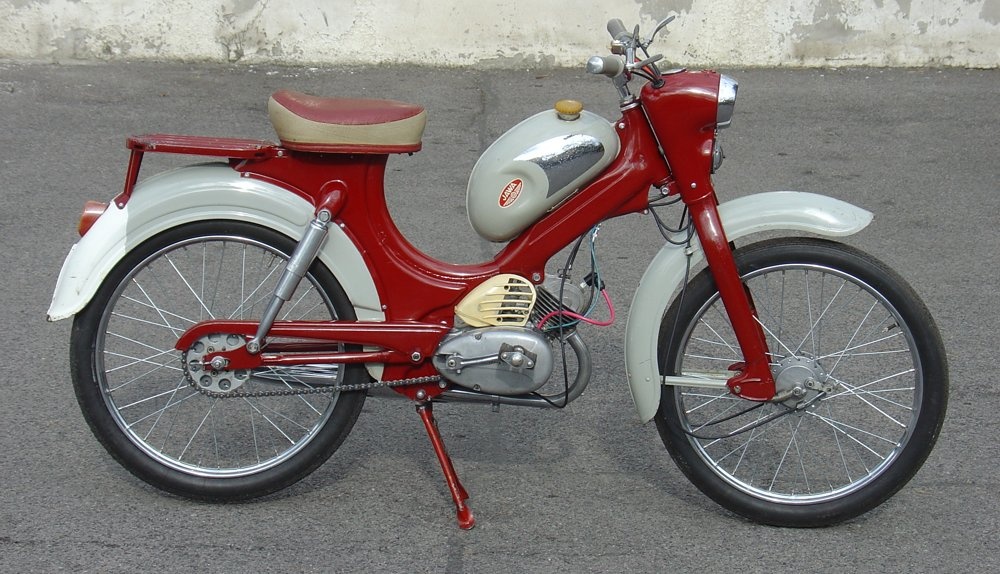
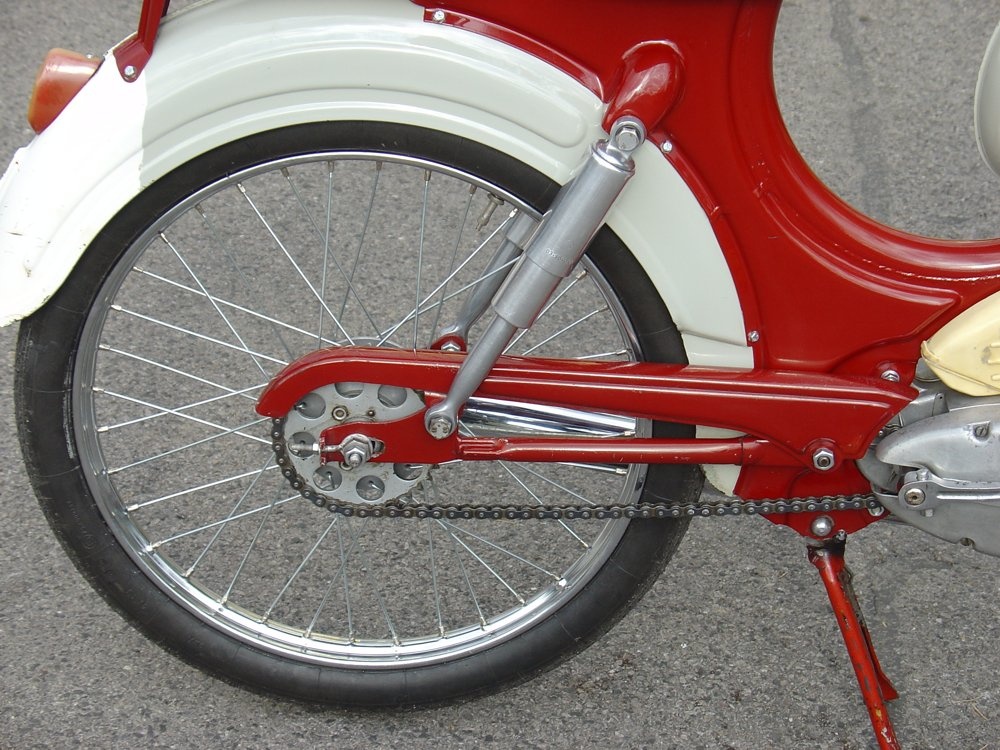
A similar fate probably met our machine – it is a version of the S22 designed for the Netherlands. It differs from the domestic version by having a reduced engine output of 1.1 hp, lower and straighter handlebars, two holes on top of the front mudguard for mounting a yellow plastic plate (a Dutch moped identification), a mandatory white tip on the rear mudguard for better visibility at night, and a chrome fuel tank with partial paint and a Jawa decal. This particular unit most likely returned to Czechoslovakia, where it was sold to its first owner on September 23, 1965 – about a year after production ended. The dealer’s stamp on the registration card is now barely legible, but it can still be recognized as a store in Prague 8 on Sokolovská Street. The seller’s signature reads Čadský Josef.
The moped has its original registration card from 1957 (marked OTK 03-57), which was originally used for the Stadion S1 model, produced only between 1957 and 1958 (about 2,000 units). Since I found an export S22 owned by another collector with the same card, it can be assumed that export models later sold on the domestic market were often equipped with these older cards from earlier production runs. The card states that a driving license is not required to operate the moped – a note that was usually crossed out in later years, but here it has been left intact.
The first owner was Ing. Adolf Říha, the husband of Ludmila Červinková, a soprano singer of the National Theatre in Prague. The family spent their summers at a cottage in Řevnice, where we knew each other as neighbors. In his later years (around 1976, by my estimate), Mr. Říha offered to sell me the moped, which I gladly accepted.
I then used the moped as a means of transportation at our cottage. It ran very well, with excellent torque even in second gear. The only occasional problem was starting, which – as I later learned – was caused by a poor-quality ignition coil. Eventually, I solved the issue like most other users by installing a standard motorcycle coil under the headlamp. The moped was used occasionally until a malfunction occurred: the flywheel loosened on the crankshaft, shearing the Woodruff key and deforming the tapered joint, causing it to lose its grip. This happened sometime in the 1990s, and since then, the moped remained stored and nonfunctional in a barn.
Around 2011, my brother-in-law and I agreed that I could use his workshop to try and restore the machine. The odometer at that time showed 644 km. Its accuracy is supported by the fact that the brake shoes are still original and in good condition.
Our moped has crankcases with conical openings for silent blocks, the same type used on the later S23 engines. I have read opinions that these crankcases were fitted to export models, though it is not clear when production of this version began.
In its current fully functional condition, the moped retains its original paint (with numerous scratches) and most of the original chrome and zinc-plated parts. The exhaust muffler is new, as the original was deformed by the pedal crank and damaged by deep corrosion. The wheels, including rims and spokes, are also new and intended for regular riding; the brake drums come from scrap parts. The original wheels are preserved with their original tires, but the tread is too worn for safe use – they now serve as display items. The ignition coil has also been replaced with a new one inside the magneto.
The most extensive work was done on the fuel tank, whose interior was heavily corroded despite being filled for years with a gasoline-oil mix (M2T). To remove the rust, I used a citric acid solution and several steel parts (nuts and bolts) that helped mechanically clean the inner surface when shaken. After cleaning, the tank was rinsed, dried, and coated with epoxy varnish to cover the entire interior surface. The corrosion was so severe that the fuel tap had to be completely replaced as it was completely clogged. Corroded screws, nuts, and control cables were also replaced – the originals had frayed ends or broken casings. The new cables are slightly longer since they are designed for the domestic version with higher handlebars. The speedometer drive was also replaced after I accidentally damaged it during disassembly by stepping on it and stretching its housing.
The engine was resealed to prevent gear oil leakage. Otherwise, the moped remains in a remarkably well-preserved original condition, including the saddle, tool kit, and air pump.
Jan Kuchař
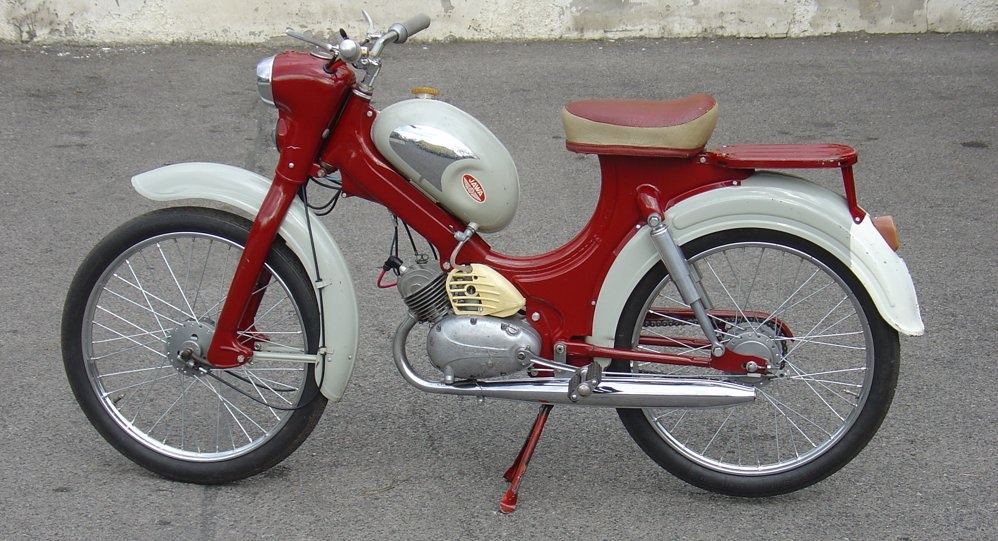
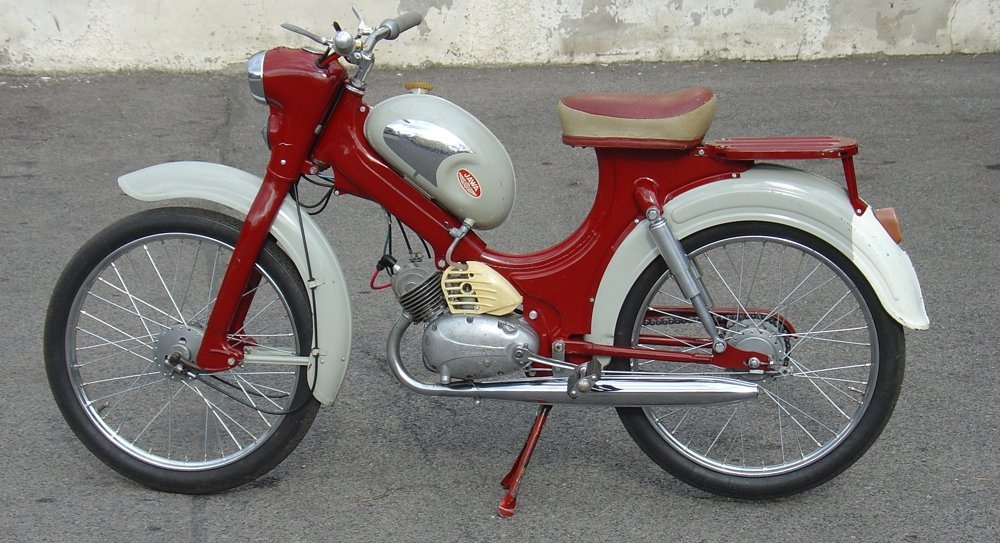
The exhaust silencer is new. The original was damaged by the pedal, and the chrome was peeling.
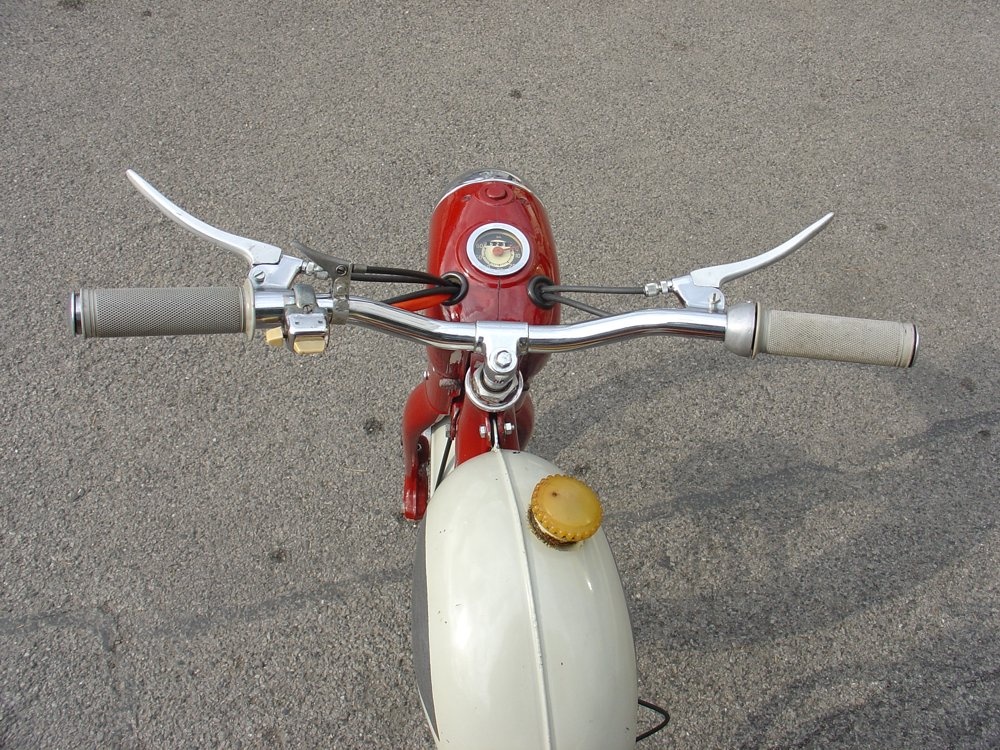
Everything original – color and chrome. Only the cables are new. Handlebars are lower and straighter than standard.
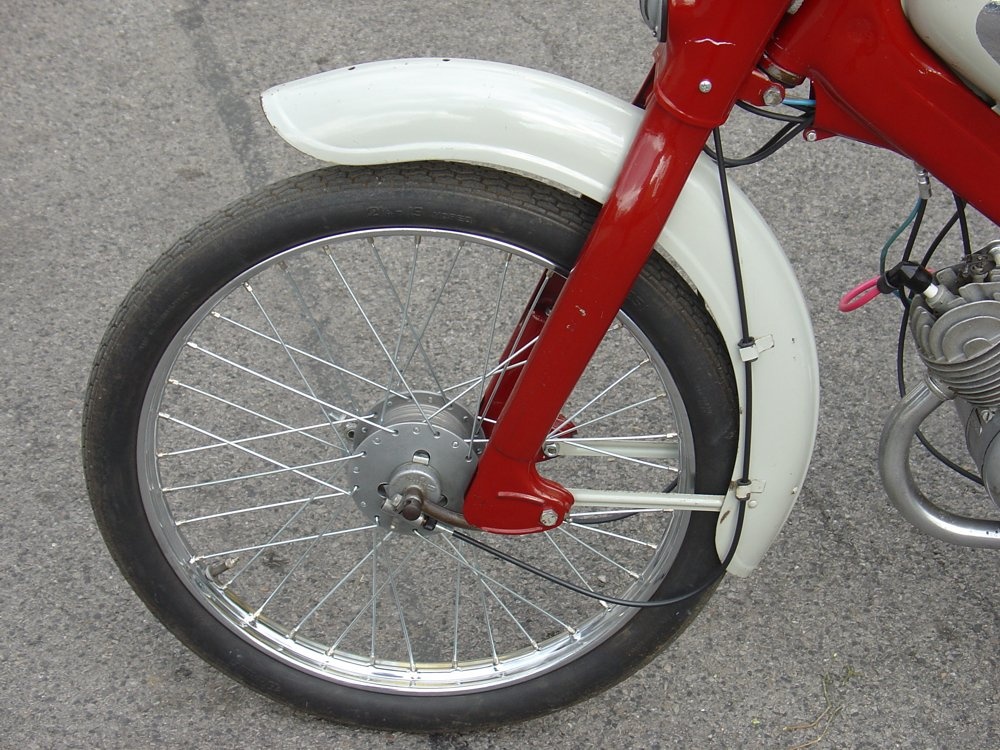
New wheel rim and spokes, current tires chosen for tread pattern. New speedometer cable. Fender holes for a plastic plate required in the Netherlands.
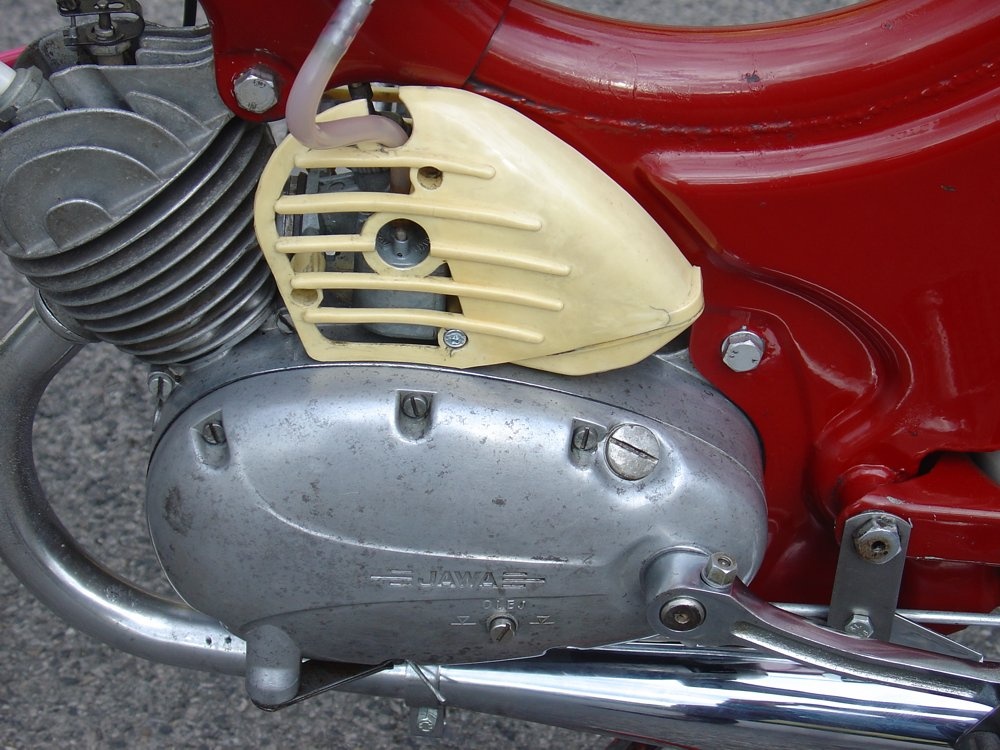
Plastic intake silencer. Possibly original silver coating. On the right, swing fork shaft with grease lubrication hole.
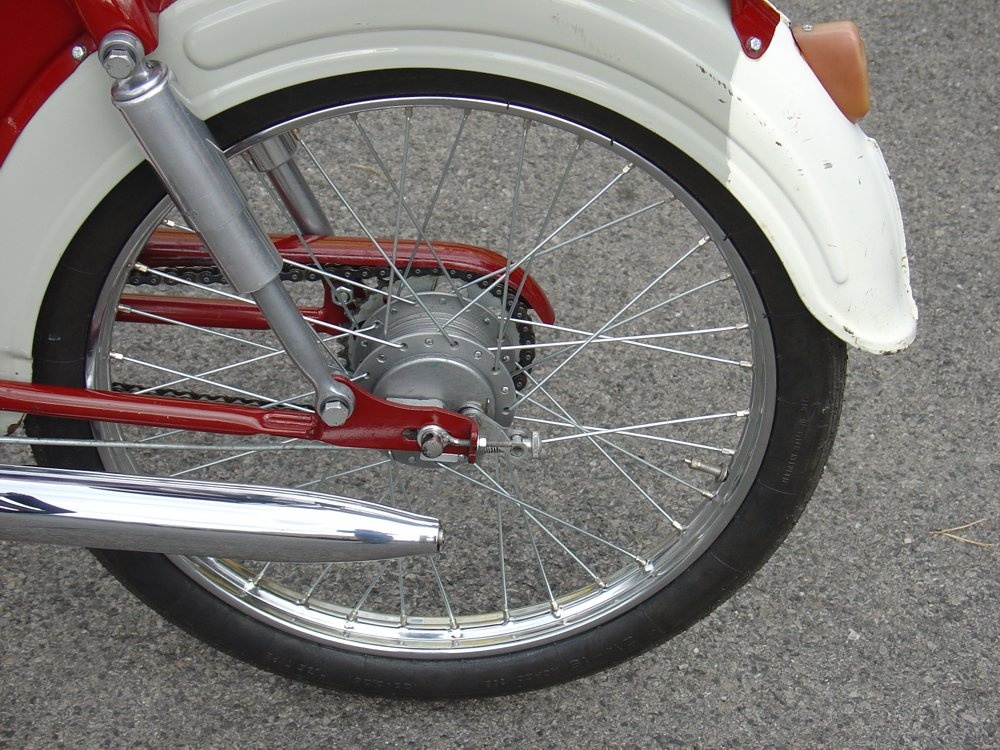
New wheel rim and spokes. White marking at the end of the fender according to Dutch regulations.
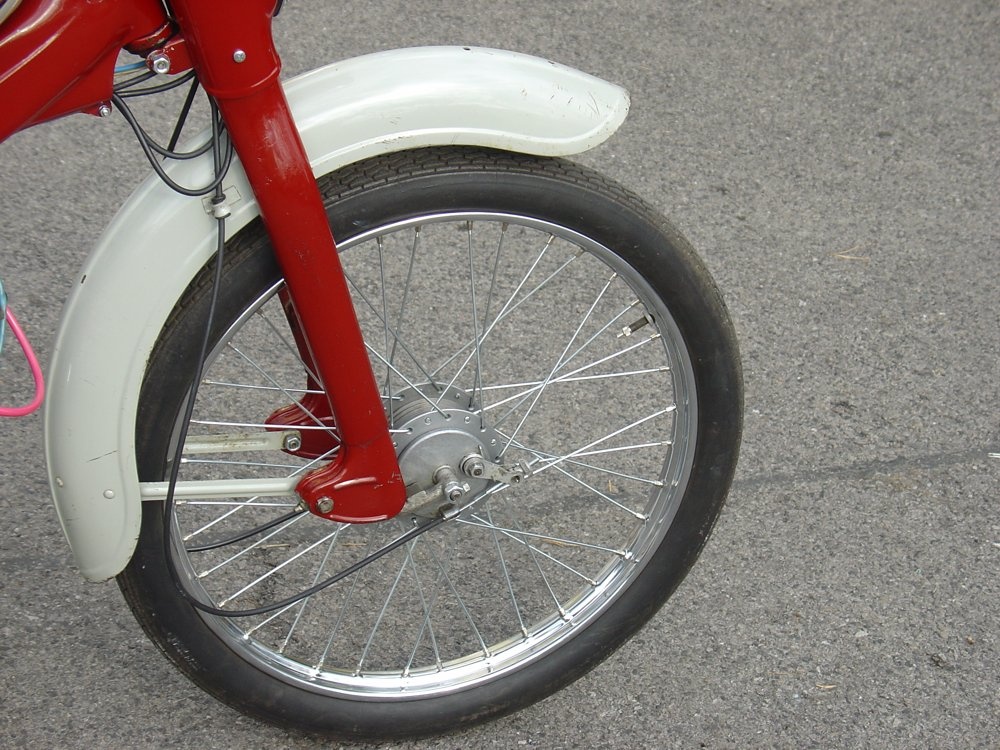
Front brake Bowden cable. Holes for the plastic plate (Netherlands).
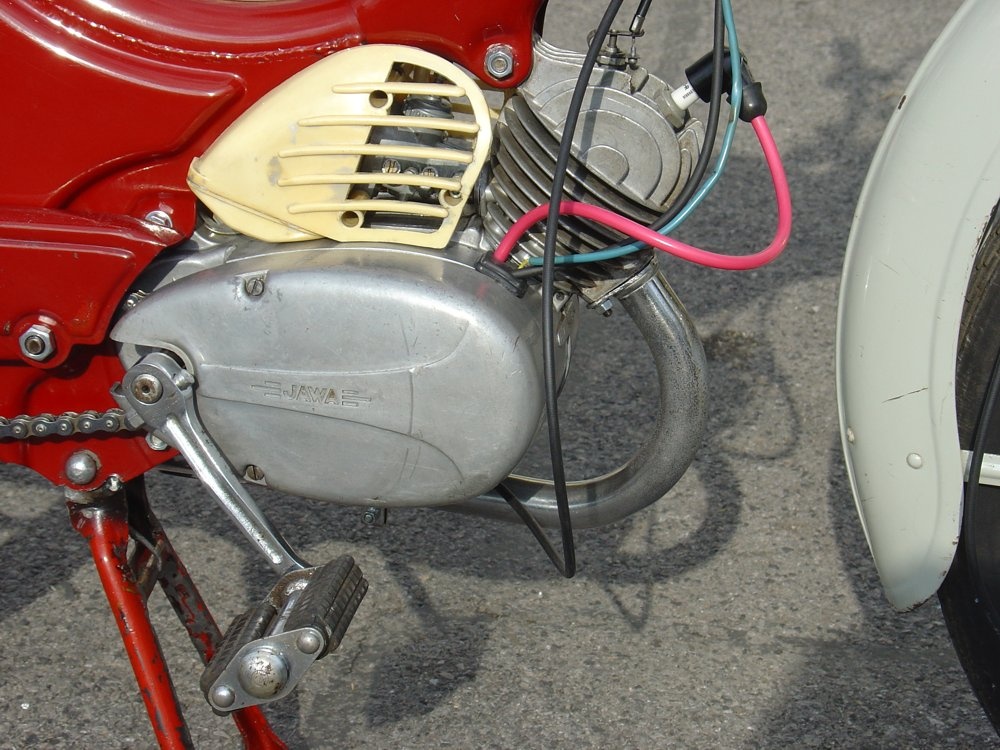
Refurbished ignition coil – the engine starts on the first try. The stand was reinforced.
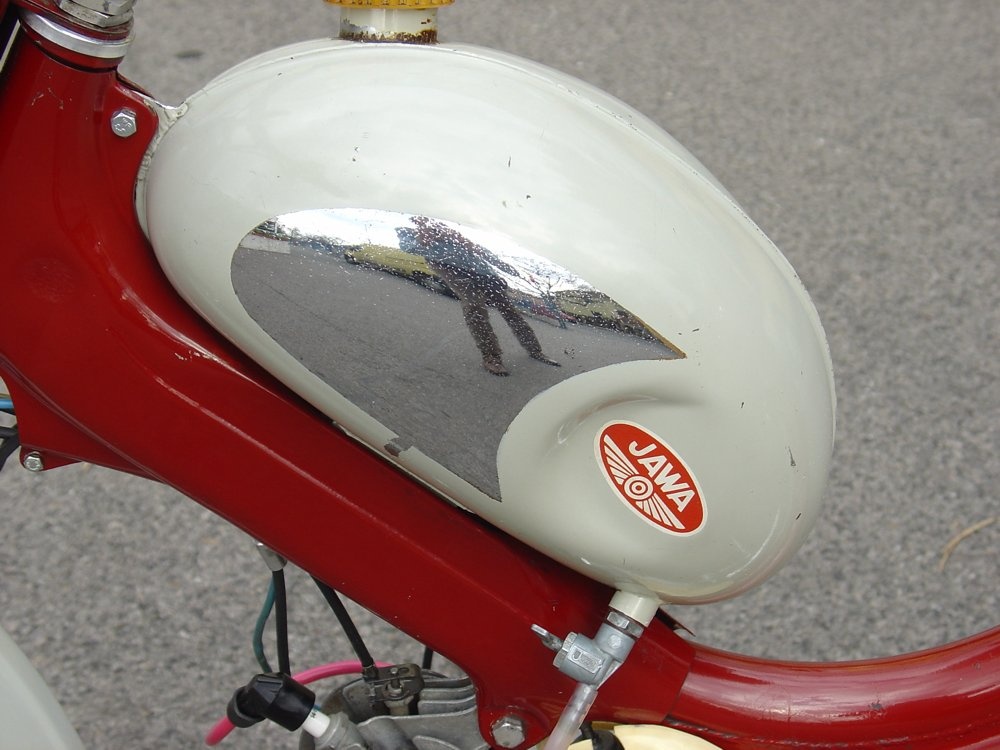
Typical fuel tank of the export version – chrome, later bordered by a golden line. The name Stadion was deliberately omitted in favor of the Jawa brand.
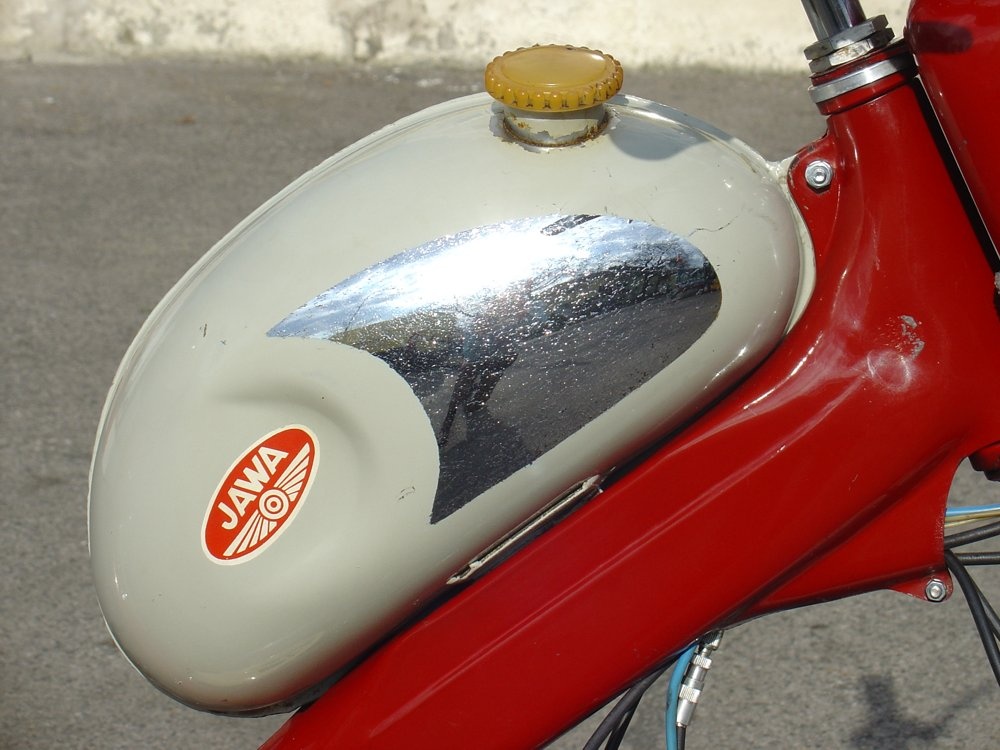
The fuel tank was rusty, cleaned with citric acid, and coated with epoxy. Now it’s transparent to see the fuel level.
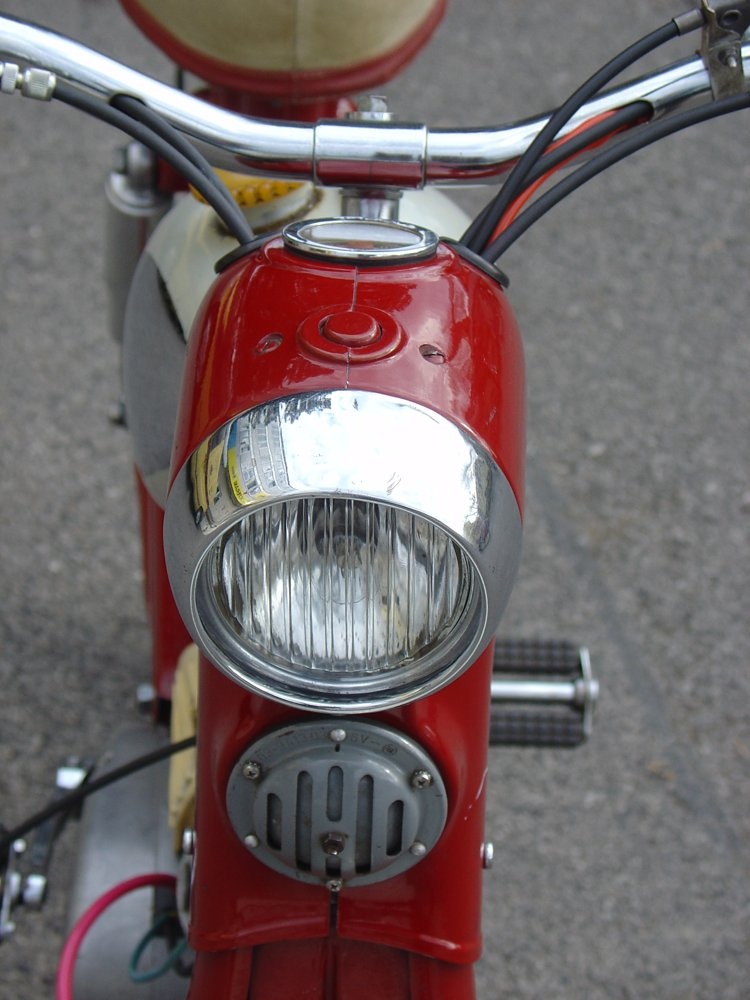
Original headlight (slightly damaged frame) and buzzer.
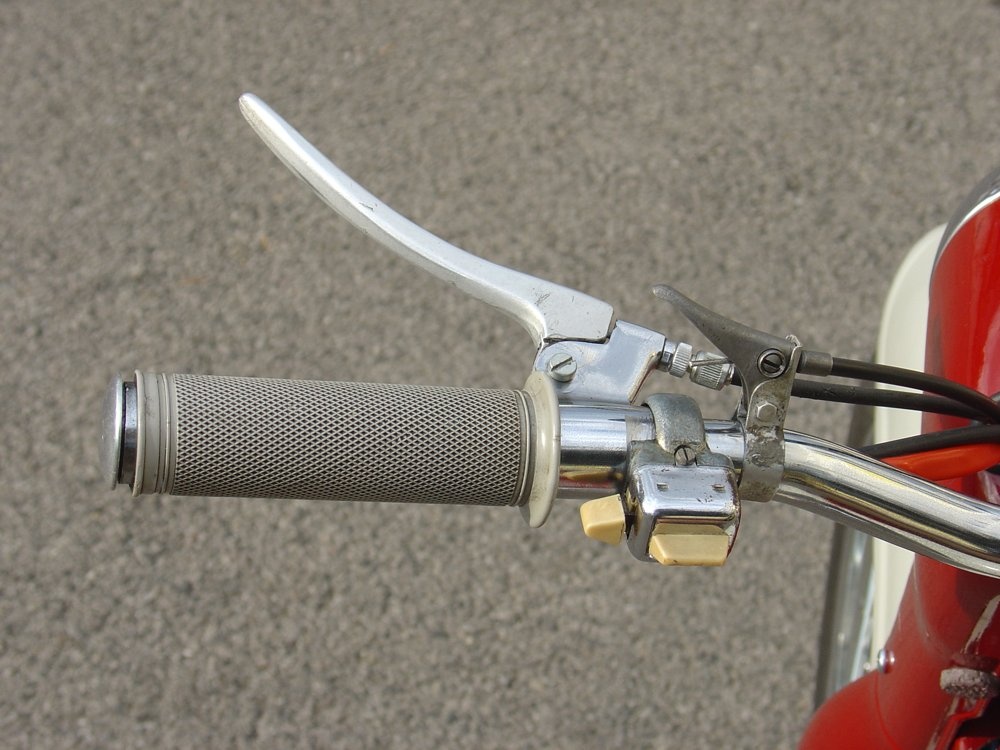
Detail of the left handle – gear shift with clutch, decompressor, light switch, and horn button.
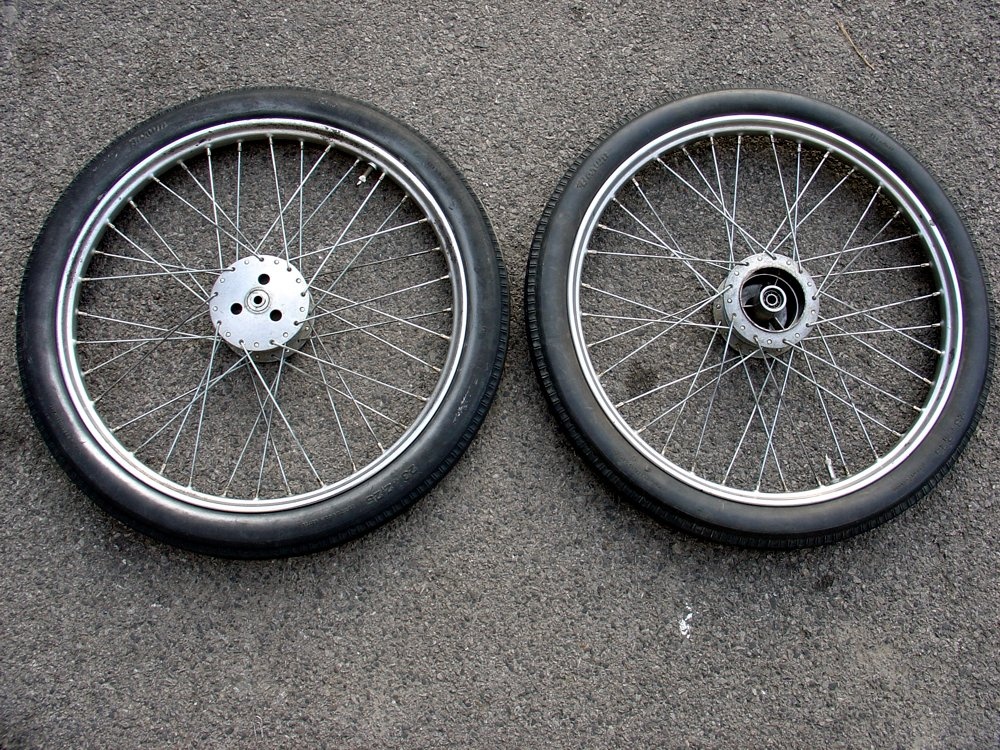
Original wheels with preserved chrome and galvanized spokes. The rear one is in better condition thanks to engine oil.
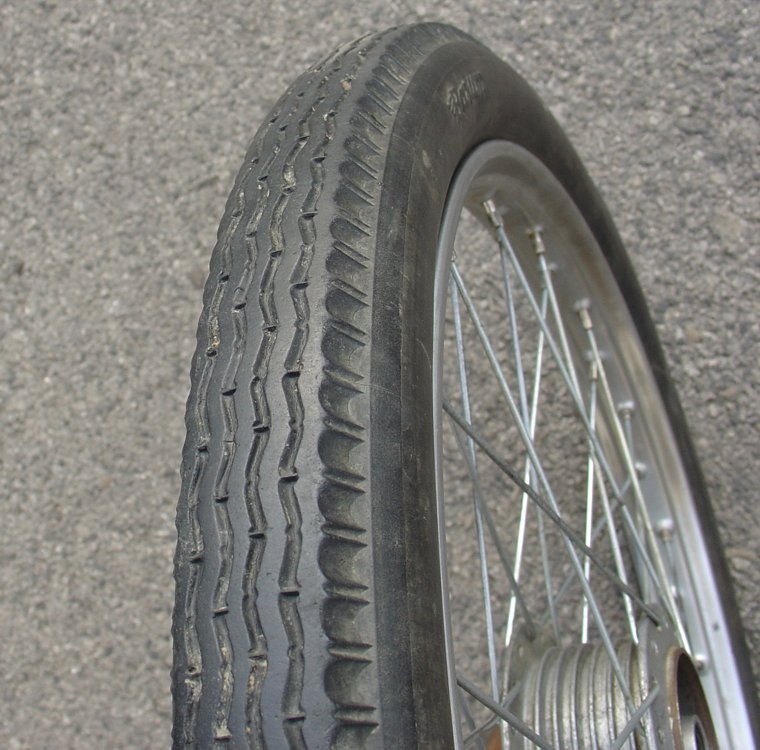
Detail of the original tire pattern. The second tire is from another wheel, paint removed.
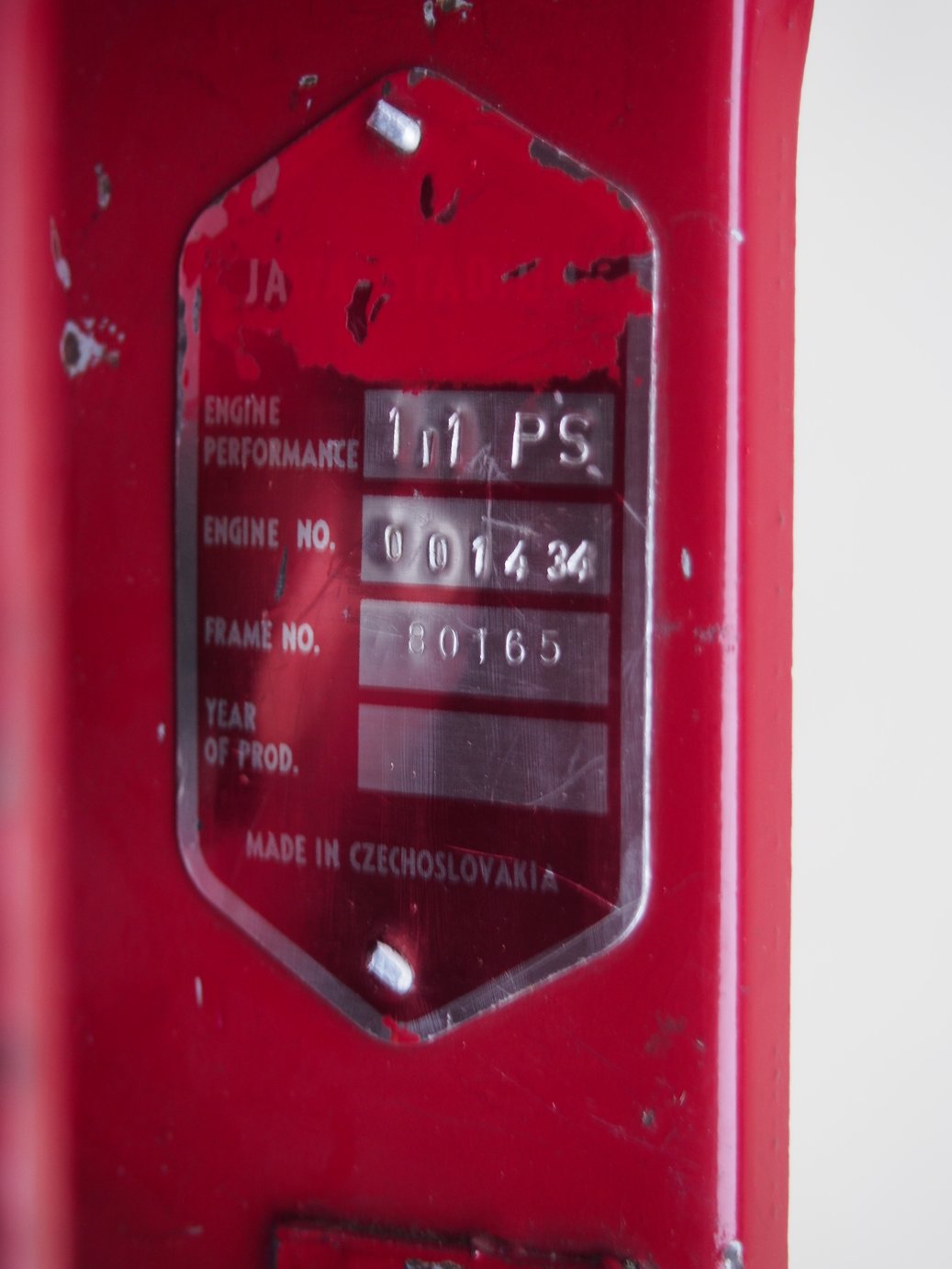
Moped identification plate (rotated for legibility). The export version was labeled JAWA-STADION and had reduced power of 1.1 HP. Year of manufacture missing – likely intentionally.